The President and the Committee of the Hellenic Medical Society UK have the pleasure of inviting you to
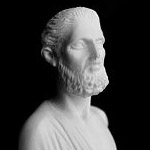
The Hippocratic Oration 2013
Professor Theoklis Zaoutis
Professor of Paediatrics, University of Pennsylvania
“BAD BUGS, NO DRUGS”
 Theoklis Zaoutis, MD, MSCE is the Thomas Frederick McNair Scott Professor of Pediatrics and Professor of Epidemiology at the Perelman School of Medicine at the University of Pennsylvania (PENN) and Associate Chief of the Division of Infectious Diseases at the Children’s Hospital of Philadelphia (CHOP). He is also Senior Scholar in the Center for Clinical Epidemiology and Biostatistics at PENN. He served as Director of the Antimicrobial Stewardship Program at CHOP from 2004-2010. He is the author of over 150 peer-reviewed publications, most of which are in pediatric infectious diseases with a focus on healthcare acquired infections, antimicrobial resistance, and antimicrobial use.
Dr. Zaoutis currently serves on the Centers for Disease Control and Prevention’s Office of Infectious Disease Board of Scientific Counselors’ Antimicrobial Resistance Working Group, NIAID’s Antimicrobial Resistance Leadership Group, the Antibiotic Resistance and Prescribing in European Children Working Group and the AAP’s Committee on Infectious Diseases (Red Book Committee). He is Editor-in-Chief of the Journal of the Pediatric Infectious Diseases Society. In 2009, he received the Society for Healthcare Epidemiology of America Pediatric Investigator Award.
Please join us for the Hippocratic Oration
on Friday, 22nd November 2013
at the Hellenic Centre
Great Hall
16-18 Paddington St.
London W1U 5AS
United Kingdom
7:30 to 8:30pm
(reception 6:30 to 7:30pm)
Prior registration for reception catering purposes (free)
Please email the president at eg318@cam.ac.uk
 ΚΕ.Σ.Υ. plans to develop a database consisting of the contact information of Greek expatriate scientists, which will be available on it’s website. In this way, a channel of communication will be established to enable scientists in Greece to explore opportunities abroad as well as expatriate scientists to further support the scientific community in Greece. They invite all the expatriate medical workforce to declare their availability and willingness to be contacted by and collaborate with individuals as well as scientific organisations in Greece
 Using a realistic but imaginative approach, the objective of the initiative is to bring high quality human capital of the country together and to create collaboration links between them. This networking of Greeks can strengthen the growth prospects of the country and ensure that participating Greeks become part of a joint endeavour.